
Bei dir bleiben · Grenzen setzen
Setting boundaries: Why saying no is so hard and what it gives you
You say yes and realise in the very same moment that you actually mean no. You take on one more task, go to one more meeting, listen for another half hour. And in the evening you wonder why you feel so empty.
Setting boundaries sounds simple. In everyday life it's one of the hardest things there is for many people. In this article we look at what boundaries actually are, why they're so hard for us and what they can give you.
What are boundaries, really?
A personal boundary marks where you end and another person begins. It shows what is okay for you and what isn't. How much closeness you want, how much time you can give, which tone is okay for you.
Boundaries aren't walls. A wall shuts others out. A boundary is more like a garden fence with a gate: you decide when it's open and for whom.
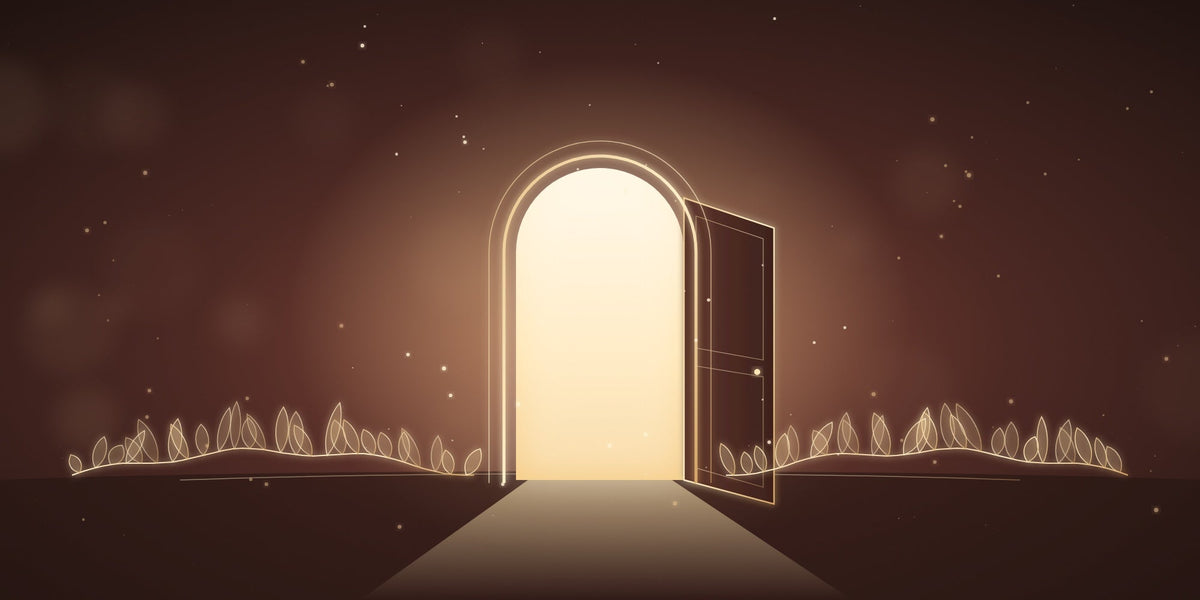
A boundary isn't a wall. It's a door, and you decide when it opens.
What kinds of boundaries there are
Boundaries show up in many areas. Often we're very clear in one area and hardly at all in another:
| Kind | What it's about |
|---|---|
| Physical | How much closeness and touch feels good to you, and how much rest your body needs |
| Emotional | Which feelings belong to you and which you don't have to carry for others |
| Time | How much time and availability you give others, and how much you need for yourself |
| Mental | That your opinions and values are allowed to stand, even if others don't share them |
| Material | How you handle money, things and your space, and what you lend or don't |
| Digital | When you're reachable and when messages can simply wait |
It's worth looking honestly at which area comes easily to you and which doesn't. That's often exactly where the exhaustion you otherwise can't explain comes from.
How to tell you're missing boundaries
You're often irritable without quite knowing why
Quiet anger and resentment are often a sign that a boundary was crossed long ago. Your head said yes, your body didn't.
You constantly explain and justify yourself
A simple no isn't enough for you. You offer reasons, apologies, alternatives, as if you first had to earn your no.
You hardly have any time for yourself
Your calendar belongs to everyone except you. Breaks only come once everything else is done, so almost never.
You feel responsible for other people's feelings
When someone is in a bad mood, you look for the fault in yourself and try to rescue the atmosphere.
Why saying no is so hard
Very few of us learned how to set boundaries. Many of us learned the opposite: be nice, don't make waves, think of others. As a child, saying no may have felt dangerous because it meant rejection or conflict.
On top of that, sensitive people feel the other person's disappointment especially clearly. You'll find more on this in my article on high sensitivity. And if you take in a lot from outside, boundaries are closely linked to energy protection.
Finding boundaries hard isn't a character flaw. It's a habit that once made sense. And habits are allowed to change.
What healthy boundaries give you
Boundaries are often seen as something harsh. Yet they are deeply caring, for you and for your relationships. They give you energy, because you no longer carry everything. They give you self-respect, because you believe yourself. And they give your relationships honesty, because a yes from you then truly means yes.
Three questions for this week
You don't have to set a boundary today. Simply start by paying attention:
- With whom is saying no easiest for me, and what is different there?
- Which request would I most have liked to turn down this week?
- How would my everyday life feel if I had to justify myself less?
Write down whatever comes to mind. Simply noticing is already a first step.
The hardest part often comes afterwards
Many people have long known where their boundary lies. What holds them back isn't knowledge, but what comes after the no: the other person's reaction, the guilty conscience, the doubt about whether it was right. That's exactly the moment I wrote my workbook for.
Setting boundaries. For myself.
Not another guide to what boundaries are, but a companion for the moment after. Honest reflection across four areas of life, work, relationships, family and friendships, with a guided audio visualisation.
Frequently asked questions about setting boundaries
Is setting boundaries selfish?
No. Selfish would be ignoring other people's boundaries. Protecting your own simply means taking yourself as seriously as the people around you.
Do I have to give a reason for saying no?
Not necessarily. A short, friendly no is a complete answer. The more you explain, the more it often invites discussion.
Why do I feel guilty after saying no?
Feeling guilty after saying no is very common, especially at the beginning. It usually says more about old habits than about the situation itself. How to deal with that feeling is a big topic of its own, and it's exactly what my workbook is about.
What if someone doesn't respect my boundary?
Then that tells you something about this connection. A boundary doesn't work because the other person likes it, but because you stay with it.
Can you set boundaries within your family too?
Yes. Many people find it especially hard within the family, because old roles quickly take hold again there. All the more valuable when you're allowed to be a little more yourself there.
I hope you'll believe yourself more and more often. And if you like, tell me on Instagram which boundary you're standing at right now.